
Whiplash in Fort Worth: Symptoms, Chiropractic Care, and When to Seek Help
If you’ve recently been in a fender-bender on I‑20, took a hard hit on the soccer field, or even experienced a sudden stop that snapped your head forward and back, you may be wondering if your neck is truly okay. Whiplash can be sneaky. Sometimes the pain shows up right away; other times it builds over the next day or two. At Cityview Chiropractic here in Fort Worth, we help patients understand what’s happening in their neck, calm the inflammation, and regain comfortable movement—safely and step by step.
In this article, I’ll explain what whiplash is, common symptoms, how chiropractic care may help, and when it’s smart to be evaluated. You’ll also learn practical home tips, red flags that need urgent medical attention, and what to expect from a visit with us.
Whiplash is a neck injury that happens when the head is rapidly forced forward and back (or side to side), straining the soft tissues and joints of the neck. It’s common after motor vehicle collisions and can cause pain, stiffness, headaches, and trouble turning the head.
Table of Contents
What Is Whiplash?
Whiplash is often called a “neck sprain/strain.” During a crash or sudden force, the neck moves faster than the muscles and ligaments can control, which can irritate joints, stretch soft tissues, and trigger inflammation. Even at lower speeds, this quick motion can upset the finely tuned balance between the neck joints (facet joints), muscles, and nerves.
Symptoms can range from mild soreness to sharp pain and limited range of motion. You may also notice headaches (often at the base of the skull), shoulder or upper back discomfort, and fatigue. The good news: with the right, individualized plan—centered on gentle movement, graded activity, and appropriate manual therapy—many people improve well over time.
Why Whiplash Happens: The Mechanics and Common Causes
Think of your neck as a flexible stack of moving parts. It’s designed for motion and to protect the spinal cord. In a sudden acceleration–deceleration, the head lags behind the body, then whips forward. This can irritate joint capsules, overstretch muscles, and sensitize nerves. The result is pain, stiffness, and the feeling that turning your head is “guarded.”
While car accidents are the most common cause in Fort Worth, we also see whiplash from contact sports, falls, or even abrupt braking that jolts the head. The severity isn’t only about vehicle damage. Even a small bumper tap can transfer enough force to jolt the neck—especially if you were turned to the side, didn’t expect the hit, or your headrest wasn’t positioned well.
Signs and Symptoms After a Car Accident
Whiplash symptoms often develop within 24–72 hours, but they can appear immediately. Here are common things patients tell us—and what those symptoms can sometimes point to.
| Common Symptom | What It Might Indicate |
|---|---|
| Neck pain and stiffness | Irritated facet joints, strained muscles/ligaments |
| Headache at the base of the skull | Referred pain from neck joints or tight suboccipital muscles |
| Pain between the shoulder blades | Strain of upper back muscles, protective muscle guarding |
| Reduced range of motion | Inflammation, joint irritation, or protective spasm |
| Dizziness or feeling “off” | Soft tissue irritation, postural muscle imbalance; warrants evaluation |
| Tingling or numbness into the arm | Possible nerve irritation; needs careful assessment |
Symptom intensity doesn’t always match the amount of tissue irritation. That’s why a careful exam matters. We want to understand which structures are sensitive and which movements you can safely begin to restore.
How Chiropractic Care Fits In for Whiplash
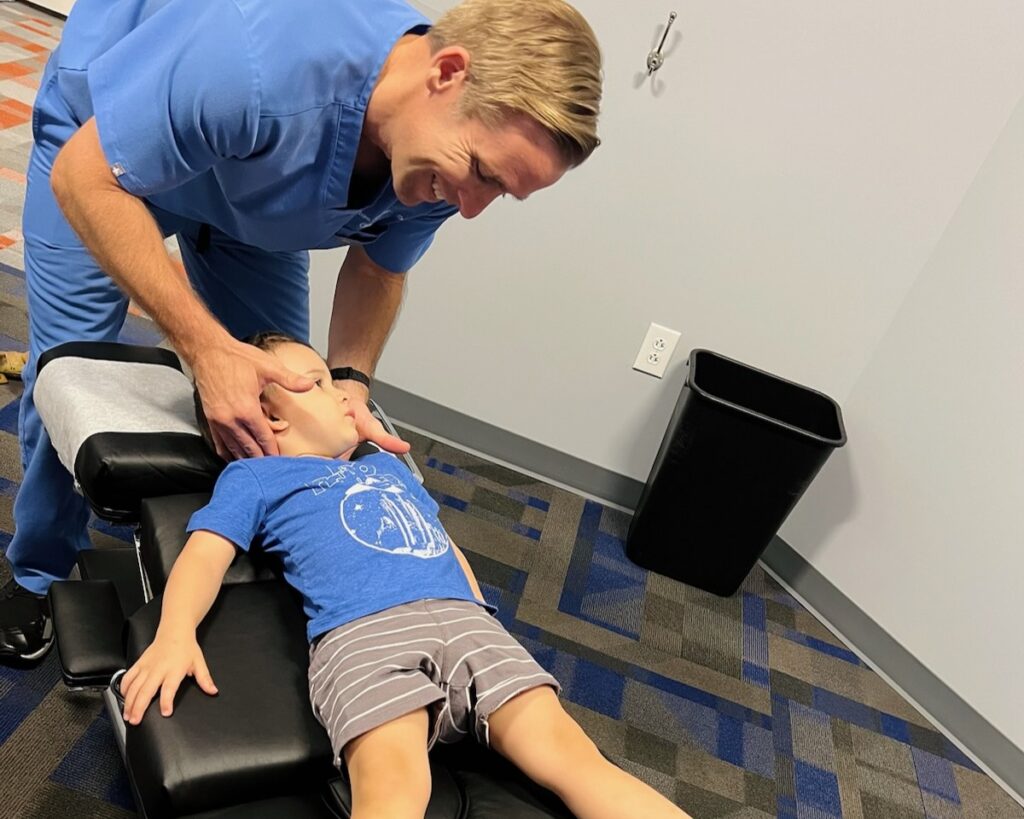
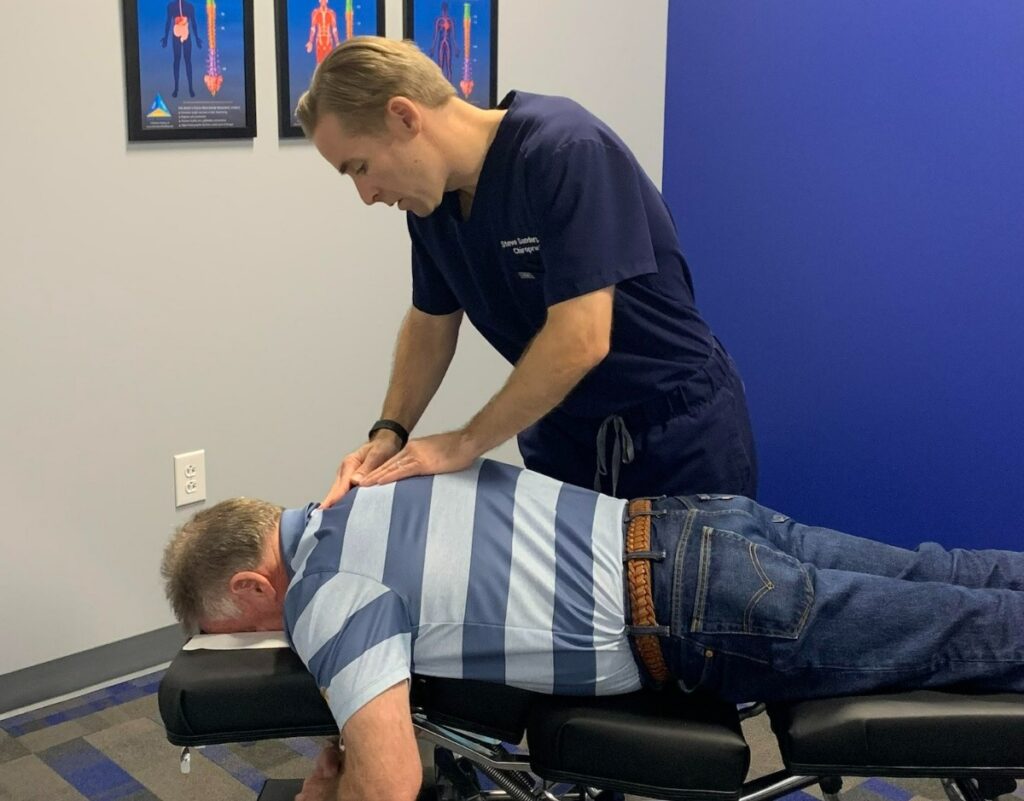
Chiropractic care focuses on the spine, joints, muscles, and nervous system—making it a natural, conservative option for many cases of whiplash-associated neck pain and stiffness. The goal is to calm irritated tissues, restore normal motion, and help you return to daily activities comfortably and confidently.
Treatment may include (tailored to your presentation):
- Gentle joint techniques: We use mobilization and, when appropriate, chiropractic adjustments to improve segmental motion and reduce joint irritation. Techniques are always matched to your comfort and exam findings—forceful methods are not required to be effective.
- Soft tissue care: Targeted muscle work, myofascial techniques, and instrument-assisted soft tissue therapy can reduce guarding and help movement feel smoother.
- Movement and exercise: Early, guided movement helps tissues adapt and heal. We’ll teach you simple range-of-motion drills and later progress to stabilizing and postural exercises so you keep improving between visits.
- Education and pacing: Understanding what to expect reduces worry and supports recovery. We’ll talk about sleep positions, activity modifications, and gradual return to work, school, or sport.
Evidence perspective: Research suggests that manual therapy approaches—including spinal manipulation and mobilization—can help reduce neck pain and improve function for some patients when used appropriately and combined with active care. See overviews from the National Center for Complementary and Integrative Health (NCCIH) and a Cochrane Review on manipulation/mobilization for neck pain (Cochrane Library). For general information on whiplash, MedlinePlus provides a clear overview (NIH MedlinePlus).
Safety first: Chiropractic care is not emergency care. Before beginning treatment, we screen for red flags such as suspected fracture, significant neurologic deficits, or concussion symptoms. If something needs medical imaging or urgent referral, we’ll coordinate that promptly.
What to Expect at Cityview Chiropractic in Fort Worth
From the moment you walk into Cityview Chiropractic, our job is to listen and make a clear plan with you. Here’s how a typical first visit for suspected whiplash goes:
- Conversation and history: We’ll discuss what happened, your current symptoms, and your goals. We also review any prior neck issues and your daily demands at work or school.
- Focused exam: We check your posture, range of motion, joint tenderness, and muscle tone. Orthopedic and neurologic tests help us identify irritated structures and assess nerve function. If your symptoms suggest you need urgent medical evaluation instead, we’ll guide you there immediately.
- Imaging when appropriate: X‑rays or other imaging are not always necessary for whiplash. If we see reasons to image—like suspected fracture, significant trauma, or certain neurologic signs—we’ll coordinate the right next steps.
- Personalized plan: Together, we outline a plan that may include gentle joint care, soft tissue work, home exercises, and activity guidance. Your comfort and progress guide the pace. We’ll also teach you simple ways to sit, sleep, and move to protect your neck while it heals.
- Collaboration: If you’re also under the care of your primary doctor or another provider, we’re happy to coordinate to keep your care team aligned.
Safe, Practical Tips You Can Start Today
- Stay gently active: Short, frequent neck movements (within comfort) often help more than strict rest. Think slow turns and nods, avoiding any motion that sharply increases pain.
- Support your neck at night: Use a comfortable pillow that supports the natural curve of your neck. Sleeping on your back or side typically feels best for a healing neck.
- Use heat or cold based on comfort: Early on, many prefer brief cold packs to calm irritation; later, some like gentle heat to relax muscles. Choose what feels best and avoid extremes.
- Mind your posture: Bring screens up to eye level, keep shoulders relaxed, and take movement breaks every 30–45 minutes.
- Ease back into activity: Gradually return to normal tasks and exercise. Let pain be your guide and avoid heavy lifting or high-impact activities until you’re ready.
When to See a Chiropractor for Whiplash
Reach out promptly if you’ve had a car accident or a sudden neck jolt and notice pain, stiffness, or headaches within the next day or two. Early evaluation helps us rule out serious issues and start safe movement strategies quickly.
Consider scheduling a visit if:
- Your neck pain lasts more than 48–72 hours, you feel limited turning your head, or headaches have become frequent since the incident.
- You’re unsure which activities are safe and want a personalized plan.
- You’re back at work in Fort Worth but desk duties or driving are making symptoms worse, and you need ergonomic guidance.
Many patients improve best with a combination of hands-on care and simple exercises. Seeing a chiropractor familiar with whiplash lets you address stiffness early and avoid the cycle of guarding and deconditioning.
When to Seek Medical Care Urgently
- Severe or worsening headache, confusion, repeated vomiting, or loss of consciousness
- Significant numbness, tingling, weakness, trouble walking, or loss of bladder/bowel control
- Severe midline neck tenderness, suspected fracture, or inability to move the neck after trauma
- Vision changes, slurred speech, chest pain, or difficulty breathing
If any of these occur, call 911 or go to the emergency department. Once urgent issues are ruled out and you’re medically stable, conservative care like chiropractic and rehabilitative exercise can often be considered as part of recovery.
Myths vs. Facts About Whiplash
Misinformation can slow recovery. Here are common myths we hear in clinic—and the facts that help patients move forward with confidence.
| Myth | Fact |
|---|---|
| “If the car isn’t badly damaged, you can’t get whiplash.” | Even low-speed collisions can transfer enough force to irritate neck joints and muscles—especially if the hit was unexpected or your head was turned. |
| “Pain always shows up right away.” | Symptoms often build over 24–72 hours as inflammation and muscle guarding increase. |
| “You should rest completely until the pain is gone.” | Prolonged rest can stiffen tissues. Gentle, guided movement typically supports better recovery. |
| “Imaging always shows what’s wrong.” | Many whiplash-related irritations are soft tissue or joint sensitivity that don’t show on X‑ray. Imaging is used selectively when it will change care. |
| “Chiropractic adjustments are always forceful.” | Care is individualized. We use a range of gentle techniques, including mobilization, that fit your comfort and exam findings. |
A Fort Worth Note and Final Thoughts
Here in Fort Worth, we see plenty of neck injuries from daily driving on I‑35W, I-30, and I‑20, busy side streets, and active weekends. If you’ve had a jolt and your neck doesn’t feel quite right, don’t ignore it. A thoughtful evaluation can make a big difference in how you heal and how quickly you return to normal life.
At Cityview Chiropractic, our approach is simple: listen carefully, examine thoroughly, and guide you with clear steps. If you ever have questions about whiplash, neck pain, or what kind of movement is safe, we’re here to help.
Frequently Asked Questions
Is it safe to see a chiropractor after whiplash?
For many people, yes. We screen for red flags first and tailor techniques to your comfort. If something warrants medical referral or imaging, we coordinate that before beginning care.
Do I need X‑rays or an MRI for whiplash?
Not always. Imaging is used when there are clinical signs it will change management, such as suspected fracture or significant neurologic findings.
How soon after a car accident should I get checked?
Within a few days is ideal, especially if you notice pain, stiffness, or headaches. Early guidance helps you move safely and avoid prolonged guarding.
Will I need a neck brace?
Most people do not. Brief support may be used in specific cases, but prolonged bracing can lead to stiffness. Gentle movement is usually encouraged.
Can exercises really help whiplash?
Yes, when chosen well. Simple range-of-motion and postural exercises can reduce stiffness and support lasting improvement.
What if my pain started mild and got worse the next day?
That’s common. Inflammation and muscle guarding can build over 24–72 hours. It’s a good time to be evaluated and start a plan.
TL;DR
- Whiplash is a rapid neck motion injury that can cause pain, stiffness, and headaches—often appearing within 1–3 days.
- Chiropractic care may help reduce pain and restore motion using gentle techniques, exercise, and education—matched to your needs.
- Get checked within a few days if symptoms develop after a crash or sudden jolt; early guidance supports better recovery.
- Seek urgent medical care for severe headache, neurologic symptoms, significant midline neck pain, or trouble breathing.
- At Cityview Chiropractic in Fort Worth, we’ll evaluate carefully, treat conservatively, and coordinate referrals when needed.