
Delayed Pain After a Car Accident in Fort Worth: What to Expect and How Chiropractic Care Can Help
If you were just in a fender-bender here in Fort Worth and feel “mostly fine,” you’re not alone. Many people walk away from a crash on I-35W or the Chisholm Trail Parkway with little to no pain—only to wake up sore or stiff a day or two later. At Cityview Chiropractic, we see this pattern often, and it can be unsettling if you don’t expect it. The good news: delayed pain after a car accident is common, understandable, and in many cases responds well to conservative care when addressed early.
In this article, I’ll explain why pain can be delayed, which symptoms to watch for, what’s happening in your body, how chiropractic care may help, and when to seek immediate medical attention. My goal is to give you calm, practical guidance so you can make smart decisions for your recovery.
What is “delayed pain” after a car accident?
Delayed pain is discomfort or stiffness that doesn’t show up right after a crash but appears hours or days later. It often stems from inflammation, protective muscle spasm, and joint irritation that build after the body’s initial stress response wears off.
Table of Contents
- What is “delayed pain” after a car accident?
- Why Symptoms Can Be Delayed After a Crash
- Common Delayed Symptoms to Watch For
- What’s Happening in Your Body (Explained Simply)
- How Chiropractic Care Fits In After a Car Accident
- Practical Steps After a Minor Crash
- When to See a Chiropractor
- When to Seek Medical or Emergency Care
- Myths vs. Facts About Delayed Pain
- Final Thoughts from Cityview Chiropractic in Fort Worth
Why Symptoms Can Be Delayed After a Crash
Right after a collision, your body releases stress hormones like adrenaline. This “fight-or-flight” response helps you stay alert and may temporarily mask pain. You might feel shaken but otherwise okay at the scene.
As the adrenaline fades over the next 24–72 hours, inflammation increases. Small soft-tissue strains, joint irritation, and protective muscle tightness become more noticeable. That’s when the soreness, stiffness, or headaches often show up.
Sleep also plays a part. Overnight, muscles cool and tighten. You may wake up the next day with stiffness you didn’t feel the night before. This doesn’t necessarily mean something is “worse”—it often reflects the normal timing of the body’s healing process starting to speak up.
Common Delayed Symptoms to Watch For
Not everyone experiences the same symptoms, and severity can vary. The following are common in our Fort Worth patients after a minor-to-moderate crash:
- Neck pain or stiffness (often called whiplash-related symptoms)
- Headaches, especially at the base of the skull or behind the eyes
- Upper back or shoulder blade soreness
- Low back pain or tightness
- Reduced range of motion when turning the head or bending
- Dizziness or light sensitivity (non-emergency forms can occur with neck strain)
- Tingling or achiness into an arm, hand, leg, or foot
- Jaw tightness from bracing or clenching at impact
- Sleep disruption due to discomfort
If symptoms are intense, quickly worsening, or include concerning neurological changes, reach out to a healthcare professional promptly. I’ll outline red flags below.
What’s Happening in Your Body (Explained Simply)
Most delayed pain after a crash involves the spine and nearby soft tissues. In a typical rear-end collision, the head and neck go through a rapid back-and-forth movement (acceleration–deceleration). Even at lower speeds, this can stress the neck joints, muscles, and ligaments.
Here’s the simple version:
- Joints can become irritated. Facet joints in the neck or lower back may swell and feel stiff. You might notice pain when you look over your shoulder or bend to tie your shoes.
- Muscles tighten to protect you. Guarding is your body’s way of creating a natural “brace.” It helps prevent further strain but can also limit motion and cause soreness.
- Nerves can become sensitive. Even without a major injury, irritated tissues can “turn up the volume” on the nervous system. That’s why some people feel achy, sensitive to touch, or fatigued.
- Inflammation builds over time. The body sends fluid and immune cells to heal microtears. This is normal healing—but it can increase stiffness and pain a day or two later.
Seat belts save lives, but they also focus force through the torso and shoulder during a crash. That can leave the mid-back and shoulder blade area feeling tight or sore in the days that follow. All of this helps explain why symptoms don’t always appear right away.
How Chiropractic Care Fits In After a Car Accident
Chiropractic care focuses on the spine, joints, muscles, and nervous system. After a collision, our first job is to listen to your story, examine you carefully, and make sure you’re in the right place. If anything suggests you need imaging or medical referral, we coordinate that first.
When it’s appropriate to proceed conservatively, care may include:
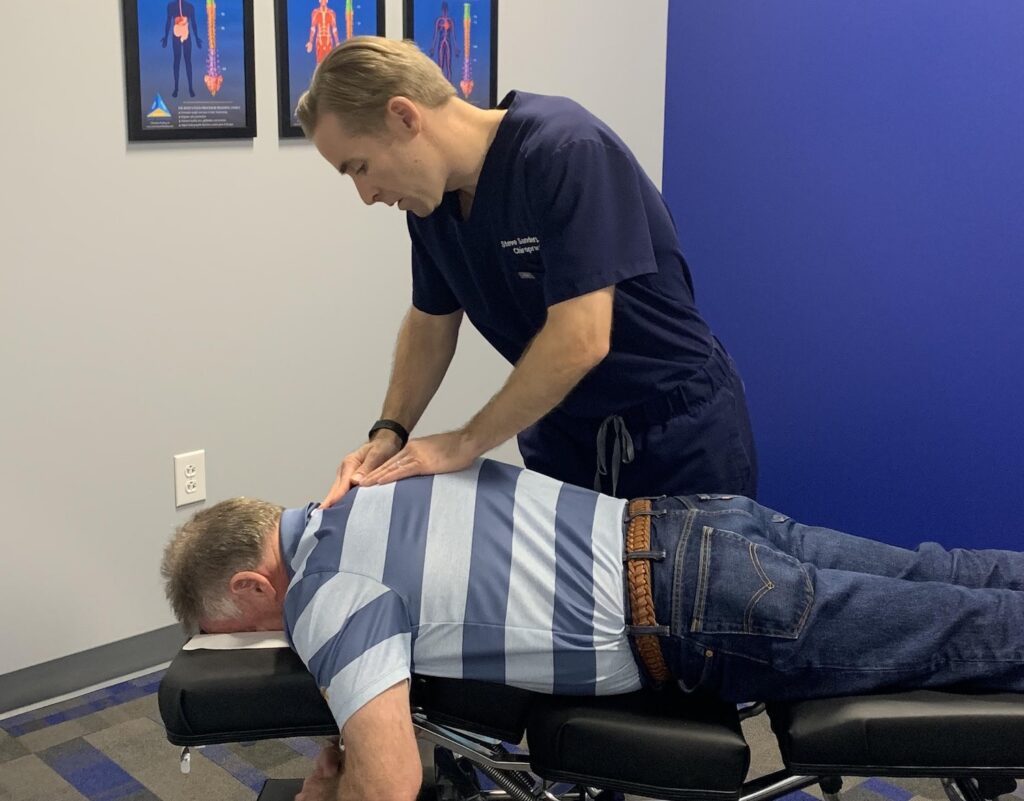
- Gentle spinal adjustments or mobilization. These aim to improve joint motion where things have gotten stiff or irritated. Restoring movement often reduces protective muscle guarding.
- Soft-tissue therapy. Targeted muscle work and gentle stretching can ease tension in the neck, shoulders, and back.
- Therapeutic exercises. We’ll show you specific movements to support healing, improve posture, and build resiliency for daily tasks.
- Home care and ergonomics. Ice or heat guidance, sleep positions, and car-seat/headrest setup can make a big difference day to day.
Evidence-based guidelines for spine-related pain often include spinal manipulation and other noninvasive options as part of conservative care. Research from organizations like the American College of Physicians and the National Center for Complementary and Integrative Health suggests these approaches may help with neck and back pain for many people, though individual results vary. See ACP’s guideline overview for low back pain and NCCIH’s information on spinal manipulation for broader context: American College of Physicians | NCCIH.
Our aim is to help you move with less pain, return to normal activity at a safe pace, and reduce the chances that a short-term strain becomes a long-term issue.
Practical Steps After a Minor Crash
If your accident did not require emergency care, these simple steps can support a smoother recovery here in Fort Worth:
- Keep moving gently. Short, easy walks and light range-of-motion exercises help prevent stiffness.
- Use cold in the first 24–48 hours if sore. A wrapped ice pack for 10–15 minutes can help manage swelling.
- Mind your posture. Avoid long periods looking down at your phone or laptop; change positions often.
- Check your headrest. It should be near the top of your head and close behind it to support your neck.
- Sleep smart. Try a supportive pillow and side-lying or back-lying positions that keep the neck neutral.
- Hydrate and eat well. Fluids and a balanced diet support tissue recovery.
- Document symptoms. Note when discomfort appears, what aggravates it, and what helps.
- Schedule an evaluation. A professional exam within a few days can guide next steps, even if symptoms are mild.
- Ask before medications. If you’re considering over-the-counter pain relievers, consult your pharmacist or medical provider.
When to See a Chiropractor
Consider booking a chiropractic evaluation in Fort Worth if:
- Your neck, back, or head feels worse 24–72 hours after the crash, or stiffness limits daily activities like driving or desk work.
- Headaches start within a day or two of the collision, especially if they’re new for you or tied to neck movement.
- You notice reduced range of motion when turning, looking up, or bending—even if the pain is only moderate.
- You want guidance on safe movement, posture, and exercises to support recovery and avoid flare-ups.
Many patients do best when they’re assessed early. A thorough exam can identify what’s irritated and create a plan to address it before patterns of compensation settle in.
When to Seek Medical or Emergency Care
Chiropractic care is not emergency medicine. Please seek urgent or emergency evaluation right away if you experience any of the following after a car accident:
- Severe or worsening headache
- Confusion
- Loss of consciousness
- Repeated vomiting
- Chest pain
- Shortness of breath
- Severe abdominal pain
- New weakness, numbness, or trouble walking
- Loss of bladder or bowel control
- Suspected fracture or dislocation
- Uncontrolled bleeding
Also consider prompt medical evaluation if you’re pregnant, on blood thinners, have osteoporosis, or have a known medical condition that could change how your body responds to trauma.
If you’re unsure where to start, call our office. We’ll help you decide whether chiropractic, urgent care, or the ER is most appropriate based on your symptoms.
Myths vs. Facts About Delayed Pain
| Myth | Fact |
|---|---|
| If I feel fine after the crash, I’m fine. | Symptoms often appear 24–72 hours later as inflammation builds and muscles tighten. |
| Only high-speed crashes cause neck or back problems. | Low-speed collisions can still strain soft tissues and irritate joints. |
| An X-ray or MRI shows every injury. | Many sprains/strains are diagnosed clinically and may not show on imaging. |
| I should rest until the pain is completely gone. | Gentle, guided movement usually helps recovery more than prolonged bed rest. |
| Chiropractic adjustments are unsafe after a crash. | Licensed chiropractors screen carefully and use techniques matched to your condition; conservative care is generally considered safe for many musculoskeletal issues. |
Final Thoughts from Cityview Chiropractic in Fort Worth
Here in Fort Worth, we’re an active community. Whether your accident happened on I-20, in a neighborhood parking lot, or on a rainy evening commute, delayed pain can interrupt your routine. You don’t have to navigate it alone.
At Cityview Chiropractic, we take time to understand your symptoms, provide a thorough musculoskeletal evaluation, and offer a clear, step-by-step plan. If you ever have questions about your recovery after a collision—minor or otherwise—our team is here to help you move forward safely and confidently.
Frequently Asked Questions
How long can pain be delayed after a car accident?
Many people notice pain within 24–72 hours, but it can sometimes take up to a week. If symptoms start or worsen after a few days, get evaluated.
Is it normal to have headaches days after a crash?
Yes, post-collision headaches are common, especially with neck strain. Seek care sooner if headaches are severe, worsening, or come with red flags like confusion or vision changes.
Do I need X-rays or an MRI?
Not always. Imaging is based on your history, exam, and risk factors. Many soft-tissue injuries are best diagnosed clinically. Your provider will recommend imaging only if it’s appropriate.
Can I go back to work or the gym after a minor accident?
Light, comfortable activity is often helpful. Avoid heavy lifting or high-impact exercise at first, and progress gradually with guidance from your provider.
How soon should I see a chiropractor after a car accident in Fort Worth?
Within a few days is ideal—even if symptoms are mild—so you can get personalized advice and reduce the risk of lingering stiffness or compensations.
TL;DR
- It’s common for pain to appear 24–72 hours after a car accident due to inflammation and muscle guarding.
- Watch for neck/back stiffness, headaches, and limited motion—even if you felt fine at first.
- Early, gentle movement and a professional evaluation help you recover more comfortably.
- See a chiropractor for conservative care; seek emergency care for severe or worsening symptoms and red flags.
- In Fort Worth, Cityview Chiropractic is here to guide you with a calm, step-by-step plan.