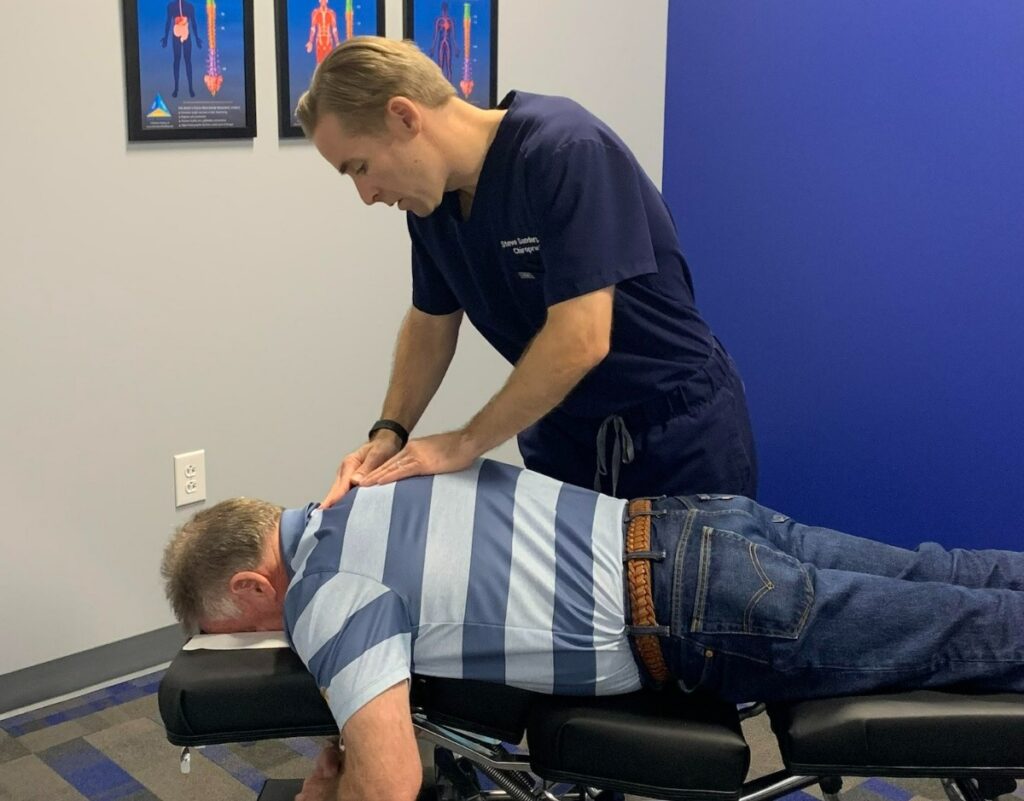
As a local chiropractor, I often see patients who are struggling with back pain, and I want to share how adjusting your posture can lead to significant relief. It’s important to understand that it’s not solely about how you sit; it’s a holistic approach that encompasses your daily habits and movements. By integrating specific posture techniques into your routine, you can experience relief and enhance your overall well-being. If you’re interested in learning how to regain comfort and stability in your life, let’s dive into five effective posture techniques that can truly transform your experience. Your journey to better spinal health starts here!
Practice Mindful Sitting
As a local chiropractor, I often see how something as simple as the way you sit can greatly affect your back health. Many people overlook this, but practicing mindful sitting can significantly alleviate discomfort and prevent future issues.
To start, it’s important to choose a supportive chair that promotes good posture. Your feet should rest flat on the floor, and your knees should form a right angle for optimal alignment. Ensure your back is straight and your shoulders are relaxed to avoid slouching.
As you sit, take a moment to connect with your body and pay attention to any areas of tension. If you begin to feel strain, don’t hesitate to adjust your position. Using a cushion or lumbar roll can help support the natural curve of your lower back when necessary.
Additionally, I can’t stress enough the importance of taking regular breaks. Every hour, stand up, stretch, or take a brief walk to keep your muscles engaged and active.
By becoming more aware of your sitting habits and making these simple adjustments, you can support better spinal alignment and significantly reduce your risk of back pain.
Strengthen Your Core
As a local chiropractor, I want to emphasize the importance of strengthening your core for maintaining a healthy back and preventing pain. A strong core plays a vital role in stabilizing your spine and pelvis, which can significantly reduce the strain on your back muscles during everyday activities.
To get started, I recommend incorporating basic exercises such as planks and bridges into your routine. These exercises engage multiple muscle groups and help build a strong foundation. Aim for three sets of planks, holding each for 30 seconds to a minute, and perform 10 to 15 repetitions of bridges.
As you become more comfortable, you can progress to exercises like bicycle crunches and leg raises, which specifically target your abdominal muscles for a more intense workout. It’s important to focus on quality over quantity, so make sure your movements are controlled and deliberate.
Don’t overlook your obliques and lower back, as they’re crucial for overall core strength. Including exercises like Russian twists and back extensions won’t only enhance your core stability but also help balance your strength across different muscle groups.
Optimize Your Ergonomics
As a local chiropractor, I want to share how optimizing your ergonomics can greatly improve your back health and overall well-being throughout the day.
It starts with your chair—make sure it’s adjusted to provide support for your lower back. Your feet should rest flat on the floor or on a footrest, and your knees should be at or slightly below hip level to maintain proper alignment.
Your computer monitor should be positioned at eye level to prevent unnecessary neck strain. Keep your keyboard and mouse close enough to avoid reaching, as this can put stress on your shoulders.
When standing, be sure to distribute your weight evenly on both feet and avoid locking your knees. If you find yourself sitting for long periods, it’s important to take breaks every hour to stand up, stretch, or take a quick walk.
You might also consider investing in a standing desk or a chair with lumbar support to encourage better posture.
Speaking of posture, it’s crucial to be mindful of how you sit and stand. Keep your shoulders relaxed and your back straight.
By implementing these simple adjustments, you’ll create a more comfortable workspace that not only supports your back health but also enhances your overall quality of life.
Incorporate Stretching Routines
As a local chiropractor dedicated to your well-being, I want to highlight the importance of incorporating regular stretching routines into your daily life. While many of you may be familiar with the ergonomic adjustments we discuss during your visits, stretching complements these changes beautifully and can significantly enhance your overall health.
Stretching isn’t just about improving flexibility; it plays a crucial role in relieving muscle tension and reducing discomfort, particularly in your back. I recommend setting aside a few minutes each hour to engage in simple stretches that target key areas such as your hamstrings, hip flexors, and back muscles.
For instance, you might stand and reach for your toes to stretch your lower back or gently twist your torso from side to side to promote spinal mobility. Seated stretches can also be beneficial—consider incorporating shoulder rolls and neck tilts while you work to relieve tension.
I encourage you to make stretching a consistent part of your daily routine. Whether it’s in the morning to wake up your body, during your breaks to refresh your mind, or before bed to unwind, these moments of stretching can make a significant difference.
Always listen to your body; if a stretch feels too intense, don’t push it.
With time and regular practice, you’ll likely notice increased mobility and reduced strain on your back, which contributes to overall pain relief and improved posture. Embracing these natural healing techniques can lead you on a path to better health and wellness.
Focus on Proper Sleep Positions
As a chiropractor, I often see how sleep positions can significantly impact your overall well-being, especially when it comes to alleviating back pain. It’s essential to be mindful of how you position yourself while you sleep. One of the best practices is to sleep on your side with a pillow tucked between your knees. This simple adjustment helps keep your spine in a neutral alignment, which can greatly reduce stress on your lower back.
If you find that sleeping on your back is more comfortable, consider placing a pillow under your knees. This position supports the natural curve of your spine and helps minimize any pressure points, allowing for a more restful night’s sleep. I strongly advise against sleeping on your stomach, as this position can place unnecessary strain on both your neck and back, leading to discomfort.
Additionally, the type of mattress you choose plays a crucial role in your sleep quality. A mattress that’s either too soft or too firm can exacerbate existing pain. It’s important to select one that provides adequate support for your body’s needs.
Similarly, a supportive pillow is vital to ensure that your head stays aligned with your spine throughout the night.
If you consistently wake up feeling discomfort, it may be time to reassess your sleep setup. By focusing on these proper sleep positions and making necessary adjustments, you can create a more restorative environment that promotes healing and helps you wake up pain-free.
Conclusion
As a local chiropractor, I want to share with you five effective posture techniques that can significantly alleviate back pain and improve your overall well-being. First, it’s essential to practice mindful sitting; this means being aware of your posture while seated, ensuring that your back is straight and your feet are flat on the ground. Strengthening your core is another crucial step, as a strong core provides a stable foundation for your spine.
Next, let’s talk about ergonomics—optimizing your workspace is vital for reducing strain on your back. Make sure your chair supports your lower back and that your computer screen is at eye level. Regular stretching is also essential; it helps to release tension and improve flexibility, making a noticeable difference in how your back feels throughout the day.
Lastly, pay attention to your sleep positions. Proper alignment while you sleep can support your spine and prevent pain from developing overnight. By incorporating these techniques into your daily routine, you can experience a significant reduction in back pain and enjoy a more comfortable, pain-free life. Remember, consistent effort is key, and I’m here to guide you through this journey towards better health.